

Buying a remote control lawn mower is a significant decision for landscaping companies, farms, contractors, property managers, dealers, and other professional users.
Unlike a conventional lawn mower, a remote controlled lawn mower combines a drive system, cutting system, wireless control system, power unit, and safety features into one specialized machine. Choosing the right configuration therefore requires more than comparing engine power or price.
The best remote control mower depends on your actual working conditions.
Are you mowing steep slopes? Maintaining orchards? Cutting tall grass on farms? Managing roadside vegetation? Working around solar panels? Or looking for equipment to add to a landscaping business?
Each application can require a different combination of machine size, cutting width, drive system, cutting technology, and power.
This remote control lawn mower buying guide explains the most important factors to consider before purchasing and provides a practical checklist for comparing machines and suppliers.

Why Buy a Remote Control Lawn Mower?


A remote control mower allows an operator to control the machine from a distance rather than riding on it or walking directly behind it.
This operating method can be particularly useful for challenging terrain and professional vegetation management.
Common applications include:
- Steep slopes
- Farms
- Orchards
- Roadsides
- Embankments
- Solar farms
- Large properties
- Rough terrain
- Tall grass
- Dense vegetation
For users who regularly work in difficult environments, a remote controlled lawn mower can provide an alternative to conventional mowing equipment.
If you are new to this type of equipment, first read our guide on what a remote control lawn mower is.
1. Identify Your Main Application

The first step in buying a remote control lawn mower is identifying what you actually need the machine to do.
Do not start with the cheapest machine or the highest horsepower.
Start with the application.
Mowing Steep Slopes
If you need to maintain hillsides, embankments, or sloped properties, traction and stability become major considerations.
A crawler remote control mower may be suitable for applications where ground contact and traction are important.
Read our detailed guide to remote control mowers for steep slopes.
Orchard Mowing
Orchards often require compact and maneuverable equipment.
The machine needs to work between trees while providing sufficient cutting performance.
Consider:
- Machine width
- Turning ability
- Cutting width
- Ground clearance
- Remote control range
- Terrain conditions
Farm Mowing
Farm applications can involve large working areas and different types of vegetation.
For farms, consider:
- Engine power
- Cutting width
- Productivity
- Fuel capacity
- Terrain
- Maintenance
Roadside Vegetation
Roadside and embankment mowing can involve uneven terrain and difficult access.
A remote control mower can be considered for professional vegetation management where conventional equipment is difficult to position.
Solar Farm Maintenance
Solar farms require regular vegetation control.
When choosing equipment for solar farm maintenance, pay attention to machine width, maneuverability, cutting height, and the spacing between solar panels.
2. Choose Between Wheels and Tracks


The drive system is one of the most important decisions when buying an RC lawn mower.
The two common options are wheel-based and crawler-based machines.
Wheel Remote Control Mower
Wheel-based machines use conventional wheels.
They can be suitable for:
- Relatively flat terrain
- Parks
- Grass fields
- Landscaping
- General vegetation maintenance
Wheel configurations can offer good mobility and may be a practical solution for accessible terrain.
Crawler Remote Control Mower
Crawler machines use tracks instead of traditional wheels.
The larger contact area provided by tracks can be advantageous on certain uneven or sloped surfaces.
Crawler mowers are commonly considered for:
- Slopes
- Rough terrain
- Farms
- Orchards
- Difficult-to-access areas
However, crawler systems are not automatically better for every application.
If most of your work takes place on relatively flat ground, a wheel-based machine may be sufficient.
The correct choice depends on your terrain.
For a more detailed comparison, see our upcoming guide on Crawler Mower vs Wheel Mower.
3. Select the Right Cutting System
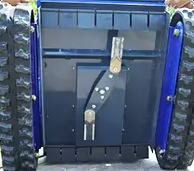

The cutting system determines what type of vegetation the machine can handle.
Two common configurations are rotary and flail mowing systems.
Rotary Cutting System
Rotary mowers use rotating blades to cut grass and vegetation.
They are commonly used for:
- Lawn maintenance
- Grass fields
- Parks
- General vegetation control
If your main requirement is regular grass cutting, a rotary system may be appropriate.
Flail Cutting System
A flail mower uses multiple cutting tools mounted on a rotating rotor.
Flail systems are commonly selected for more demanding vegetation management.
Depending on the machine and cutting tools, applications can include:
- Tall grass
- Weeds
- Dense vegetation
- Rough grass
- Certain types of brush
If you need to manage overgrown vegetation, consider a remote control flail mower.
4. Compare Engine Power


Engine power is another important factor.
However, more horsepower does not automatically mean a better mower.
The required power depends on:
- Cutting width
- Vegetation density
- Terrain
- Working speed
- Machine weight
- Cutting system
For example, a mower cutting short grass on flat terrain may have very different power requirements from a flail mower working on a steep slope with dense vegetation.
Instead of asking:
“What is the most powerful remote control mower?”
ask:
“How much power does my application actually require?”
This approach can help prevent paying for unnecessary capacity.
5. Consider Cutting Width

Cutting width has a direct relationship with productivity.
A wider cutting deck can cover more area per pass, which can be beneficial for large open fields.
However, a larger cutting width can also increase machine size and may reduce maneuverability in confined spaces.
Choose a wider deck when:
- Working on large open fields
- Productivity is a priority
- Terrain allows wider machine operation
Consider a narrower deck when:
- Working between orchard rows
- Operating in narrow spaces
- Maneuverability is important
- The property contains many obstacles
The best cutting width is therefore a balance between productivity and accessibility.
6. Check Slope Capability Carefully


If you plan to use a remote control mower on slopes, do not overlook the manufacturer’s slope specifications.
Different machines have different gradeability ratings.
However, the stated maximum slope should not be treated as a universal operating recommendation.
Actual performance can be affected by:
- Surface conditions
- Soil type
- Moisture
- Grass condition
- Machine configuration
- Machine load
- Driving direction
- Operator experience
Always follow the manufacturer’s operating instructions.
When comparing machines, ask the supplier:
What is the rated maximum slope, and under what conditions was it tested?
This question can help you make a more meaningful comparison between different models.
7. Evaluate Remote Control Range


The remote controller is one of the defining features of an RC lawn mower.
The required control range depends on the size and layout of your working area.
For small properties, a relatively short range may be sufficient.
For large farms, roadside projects, or commercial properties, a longer operating range may be more useful.
When comparing remote control systems, consider:
- Maximum control range
- Signal stability
- Response time
- Battery life
- Emergency stop
- Control layout
- Signal-loss protection
The actual usable range can vary depending on terrain, obstacles, interference, and operating conditions.
8. Look at Machine Dimensions
Machine dimensions matter more than many buyers expect.
Before ordering, measure the areas where the mower will operate.
Check:
- Overall width
- Overall length
- Machine height
- Cutting width
- Ground clearance
This is especially important for orchards and narrow access areas.
You should also measure:
- Gates
- Farm entrances
- Trailer loading areas
- Storage spaces
- Access roads
A machine that performs well in an open field may be difficult to use if it cannot pass through your property entrance.
9. Consider Machine Weight
Weight influences transportation, traction, ground pressure, and overall handling.
A heavier machine may provide certain advantages in traction and stability, but it can also require more capable transportation equipment.
Before purchasing, determine:
- Machine weight
- Trailer capacity
- Loading method
- Transport requirements
- Storage requirements
For commercial operators who move equipment between multiple job sites, transportation should be included in the purchasing decision.
10. Understand Cutting Height
Cutting height is another specification to compare.
Different applications may require different cutting heights.
For example:
- Lawn maintenance may require relatively short grass.
- Orchard maintenance may require a different cutting height.
- Tall vegetation management may require a higher starting height.
Ask the manufacturer for the available cutting-height range and adjustment method.
Do not assume that two machines with the same cutting width provide the same cutting performance.
11. Consider Fuel Consumption and Operating Cost
Purchase price is only one part of the cost of owning a mower.
For professional users, operating costs can have a significant impact on profitability.
Consider:
- Fuel consumption
- Maintenance
- Cutting tool replacement
- Filters
- Belts
- Tracks or tires
- Lubricants
- Spare parts
A machine with good productivity may reduce the amount of time required to complete a job.
When comparing machines, look at the overall operating cost rather than only the initial purchase price.
12. Evaluate Maintenance Requirements
Before purchasing an RC lawn mower, ask how easy the machine is to maintain.
Important questions include:
- How often does the engine require servicing?
- How easy is it to access maintenance points?
- How often should the cutting system be inspected?
- How are blades or flails replaced?
- How are tracks maintained?
- What electrical components require inspection?
For professional customers, simple maintenance can reduce downtime.
Ask the supplier for a maintenance schedule before purchasing.
13. Check Spare Parts Availability
Spare parts are especially important for commercial users.
If a machine is unavailable for several days because a small component is difficult to source, the cost can extend beyond the replacement part itself.
Ask the manufacturer about availability of:
- Cutting blades
- Flails
- Belts
- Filters
- Bearings
- Tracks
- Wheels
- Electrical components
- Remote controller components
A professional supplier should be able to explain how spare parts are supplied after the original purchase.
14. Ask About Warranty and Technical Support
Warranty terms can vary between manufacturers and markets.
Before ordering, ask:
- What does the warranty cover?
- How long is the warranty period?
- Which parts are excluded?
- How are warranty claims handled?
- Is remote technical support available?
- Are maintenance manuals provided?
For overseas buyers, after-sales support is particularly important.
A lower purchase price may not represent better value if technical support and replacement parts are difficult to obtain.
15. Manufacturer or Trading Company?
If you are purchasing for commercial use or importing multiple machines, consider whether you are buying directly from a manufacturer or through a trading company.
A direct manufacturer may provide advantages such as:
- Factory pricing
- Product customization
- OEM/ODM support
- Technical documentation
- Spare parts support
- Direct engineering communication
However, buyers should still evaluate the supplier carefully.
Ask for:
- Factory information
- Product specifications
- Videos of actual machines
- Testing information
- Certifications where applicable
- Customer support details
- Spare parts information
Do not choose a supplier based only on a website or product photo.
16. Consider OEM and ODM Requirements
For dealers and distributors, OEM/ODM capability can be important.
You may want to customize:
- Brand name
- Logo
- Machine color
- Packaging
- Product configuration
- User manuals
- Marketing materials
If you plan to sell remote control mowers under your own brand, ask the manufacturer about minimum order quantities, customization options, lead times, and technical requirements.
For information about working with a factory, see our future article on Remote Control Mower OEM Manufacturing.
17. Compare the Total Cost of Ownership
A useful way to compare two machines is to calculate the total cost of ownership.
Consider:
Purchase Price
Shipping
Fuel
Maintenance
Spare Parts
Labor
Downtime
=
Total Operating Cost
A machine with a lower initial price may not necessarily be the cheapest option over several years.
For commercial users, productivity and reliability can be just as important as the purchase price.
18. What Should You Ask a Remote Control Mower Manufacturer?
Before placing an order, prepare a list of questions.
Product Questions
- What is the engine power?
- What is the cutting width?
- What is the cutting height?
- What is the machine weight?
- Is it wheel or crawler driven?
- What cutting systems are available?
Terrain Questions
- What is the recommended maximum slope?
- What terrain is the machine designed for?
- Can it work on uneven ground?
Remote Control Questions
- What is the control range?
- How long does the remote battery last?
- What happens if the signal is lost?
- Does the system include emergency stop functionality?
Maintenance Questions
- What parts require regular replacement?
- Are spare parts available?
- What is the recommended maintenance schedule?
Supplier Questions
- Are OEM/ODM services available?
- What is the minimum order quantity?
- What is the lead time?
- What warranty is provided?
- Is technical support available?
These questions can help you compare suppliers more effectively.
Remote Control Lawn Mower Buying Checklist
Before you place an order, use this checklist.
Application
- Slope mowing
- Orchard mowing
- Farm mowing
- Roadside maintenance
- Solar farm maintenance
- Landscaping
- Tall grass
- Dense vegetation
Terrain
- Flat
- Uneven
- Sloped
- Steep
- Rough
- Wet
Machine
- Wheel or crawler
- Rotary or flail
- Engine power
- Cutting width
- Cutting height
- Machine dimensions
- Machine weight
- Remote control range
Ownership
- Fuel consumption
- Maintenance
- Spare parts
- Warranty
- Technical support
Supplier
- Manufacturer or factory
- OEM/ODM
- MOQ
- Lead time
- Export experience
- After-sales support
Common Mistakes When Buying a Remote Control Lawn Mower
Mistake 1: Choosing Based Only on Price
The lowest price does not necessarily provide the lowest long-term cost.
Compare the complete ownership cost.
Mistake 2: Buying Too Much Power
More horsepower can increase cost without providing meaningful benefits if the machine is used for light mowing.
Match power to the application.
Mistake 3: Ignoring Machine Width
Always check whether the mower can physically access your working area.
This is especially important for orchards and properties with narrow gates.
Mistake 4: Looking Only at Maximum Slope
A maximum slope number does not describe every operating condition.
Ask about testing conditions and recommended operating limits.
Mistake 5: Ignoring Spare Parts
A machine is only useful when it is operational.
Confirm spare parts availability before ordering.
Mistake 6: Choosing the Wrong Cutting System
A rotary mower and a flail mower are designed for different vegetation management needs.
Make sure the cutting system matches the job.
Mistake 7: Not Asking About After-Sales Support
Especially for international buyers, technical support and spare parts can be critical.
How Much Does a Remote Control Lawn Mower Cost?
The price of a remote control mower can vary significantly.
Factors that influence price include:
- Engine power
- Cutting width
- Drive system
- Crawler or wheel configuration
- Cutting system
- Remote control technology
- Optional equipment
- Customization
- Order quantity
Instead of asking only:
“How much does a remote control mower cost?”
buyers should ask:
“What configuration do I need for my application?”
Once the required configuration is clear, manufacturers can usually provide a more meaningful quotation.
For a future detailed guide, see How Much Does a Remote Control Lawn Mower Cost?
Choosing a Remote Control Mower for Different Applications
Best Choice for Slopes
Prioritize:
- Traction
- Stability
- Crawler configuration
- Appropriate slope capability
- Remote operation
Best Choice for Orchards
Prioritize:
- Compact dimensions
- Maneuverability
- Suitable cutting width
- Ground clearance
Best Choice for Farms
Prioritize:
- Productivity
- Engine power
- Cutting width
- Operating time
- Maintenance
Best Choice for Tall Grass
Prioritize:
- Cutting system
- Engine power
- Cutting capacity
- Durability
Best Choice for Solar Farms
Prioritize:
- Machine width
- Maneuverability
- Cutting height
- Terrain adaptability
- Vegetation management capability
Why Choose AWY Machine?
AWY Machine focuses on professional remote control lawn mower solutions for commercial and challenging mowing applications.
The product range includes different configurations designed for applications such as:
- Slopes
- Farms
- Orchards
- Roadsides
- Rough terrain
- Tall grass
- Dense vegetation
Depending on the application, customers can consider different combinations of drive systems, cutting systems, power levels, and machine sizes.
AWY also supports professional customers looking for factory-direct sourcing and customized solutions.
If you are a distributor, contractor, landscaping company, farm operator, or equipment buyer, the most effective way to select a mower is to provide the manufacturer with information about your actual working conditions.
Useful information includes:
- Terrain type
- Approximate slope
- Vegetation type
- Working area
- Required cutting width
- Expected operating hours
- Preferred drive system
- Target market
This allows the manufacturer to recommend a configuration based on the application rather than simply selling the most expensive machine.
Frequently Asked Questions
What is the best remote control lawn mower?
There is no single best model for every application. The right mower depends on terrain, vegetation, working area, cutting requirements, and operating conditions.
Is a crawler mower better than a wheel mower?
Crawler mowers can provide advantages on certain slopes and uneven terrain, while wheel mowers can be suitable for relatively accessible surfaces. Choose according to your application.
Should I choose a rotary or flail mower?
A rotary mower is commonly used for regular grass maintenance, while a flail mower is often selected for heavier vegetation management. The correct choice depends on what you need to cut.
How much horsepower should a remote control mower have?
The required power depends on terrain, vegetation, cutting width, machine weight, and working conditions. Higher horsepower is not always necessary.
What should I look for in a remote control mower supplier?
Consider manufacturing capability, product quality, spare parts availability, technical support, warranty, customization options, lead time, and export experience.
Can I customize a remote control lawn mower?
Depending on the manufacturer, customization may include branding, color, configuration, packaging, manuals, and other OEM/ODM requirements.
Is a remote control mower suitable for commercial use?
Yes. Remote control mowers can be used for professional landscaping, farming, orchard maintenance, roadside vegetation management, and other commercial applications when the machine is properly matched to the job.
Final Thoughts
Buying a remote control lawn mower should begin with the job rather than the machine.
First determine your terrain, vegetation, working area, and required productivity. Then compare the drive system, cutting system, engine power, cutting width, slope capability, remote control system, dimensions, maintenance requirements, and supplier support.
For difficult slopes and rough terrain, a crawler remote control mower may be worth considering. For general grass maintenance, a wheel-based rotary mower may be sufficient. For tall grass and heavier vegetation, a remote control flail mower may provide a more suitable solution.
Professional buyers should also evaluate the manufacturer behind the machine.
A reliable supplier should be able to provide clear specifications, spare parts, technical support, warranty information, and appropriate customization options.
The goal is not simply to find the cheapest remote control mower.
The goal is to find a machine that can perform reliably in your actual working environment while providing a reasonable total cost of ownership.
If you are comparing remote control mowers for slopes, farms, orchards, landscaping, solar farms, or other professional applications, contact AWY Machine with your working requirements.
Tell us about your terrain, vegetation, and application, and AWY can help you identify a suitable remote control mower configuration.
Related Articles
- What Is a Remote Control Lawn Mower?
- How Does a Remote Control Lawn Mower Work?
- How to Choose a Remote Control Lawn Mower
Explore AWY Remote Control Mowers
View AWY Remote Control Mower Products